Nº 3 (Nov.2013-Oct.2014): “Neoliberal cities”: urban policies, design and social justice.
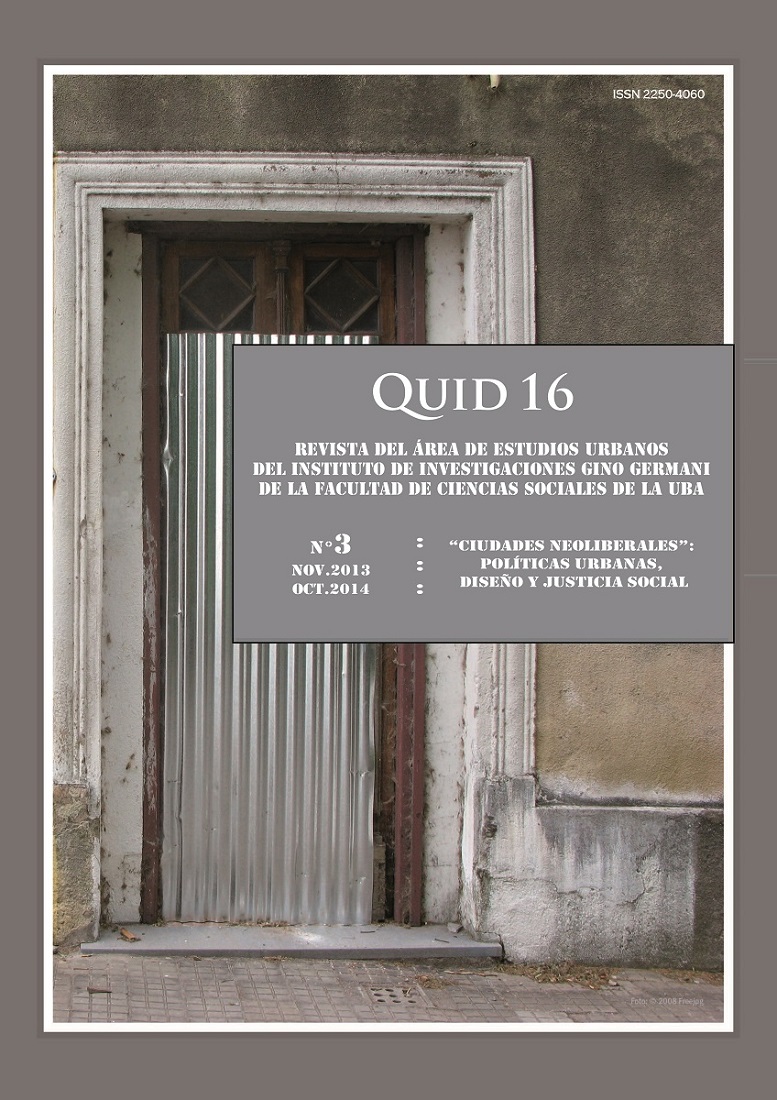
In recent years, urban sociology has made a greater movement towards an integral and interdisciplinary approach, looking at the role of both the structural variables as well as cultural processes. In this context, new challenges have been incorporated to the urban studies agenda: the role of the so called “creative economies” and the strong association they have with the design centers, development, a bet towards environmental friendly cultural industries, the virtualization of a part of the economic and financial processes, as well as the political and social ones, and all this encompasses. These changes coexist with the new shapes of traditional issues: the socio-spatial segregation, urban renovation processes and persistence of social injustice in the city, among others. This number approaches current urban policies and those related to public spaces and habitation in particular, in an scenery where the growing difficulties to access the urban central spaces (Lefevbre, 1972) for many social sectors coexist with the sustained deployment of real state capital, which has radically modified urban territories.
Published:
2013-11-29